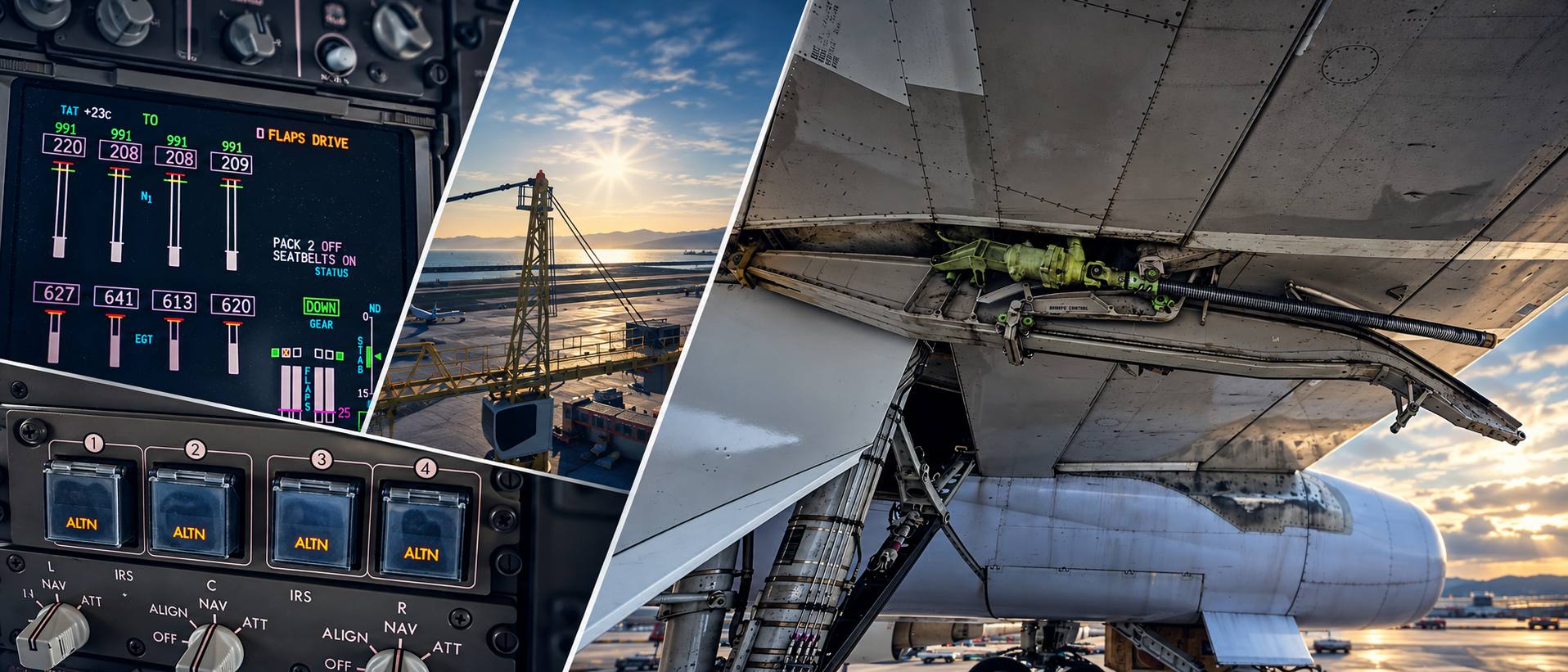
Takeoff dispatch
Choose the aircraft configuration and the runway you are actually using, then let VPT work through the applicable limits.
Takeoff and landing performance built from detailed aircraft, airport, obstacle and weather data.
16 airports included. No credit card required.
Aircraft are certified and operated within defined performance margins. Before takeoff and landing, operators use dedicated performance systems to determine whether the aircraft can safely and legally operate from the selected runway under the expected conditions.
The important point for VPT users is simple: runway length alone is not enough. Wind, temperature, slope, obstacles, aircraft configuration, engine-out climb capability, braking and operational restrictions can all change the result.
A performance calculation is not a single formula. It is a comparison of multiple limits — and the most restrictive one becomes the answer.

VPT is designed to give beginners a clear result while still exposing the technical detail experienced pilots expect. Much of the input can be automated, while the calculation itself evaluates the full set of applicable performance limits behind the scenes.
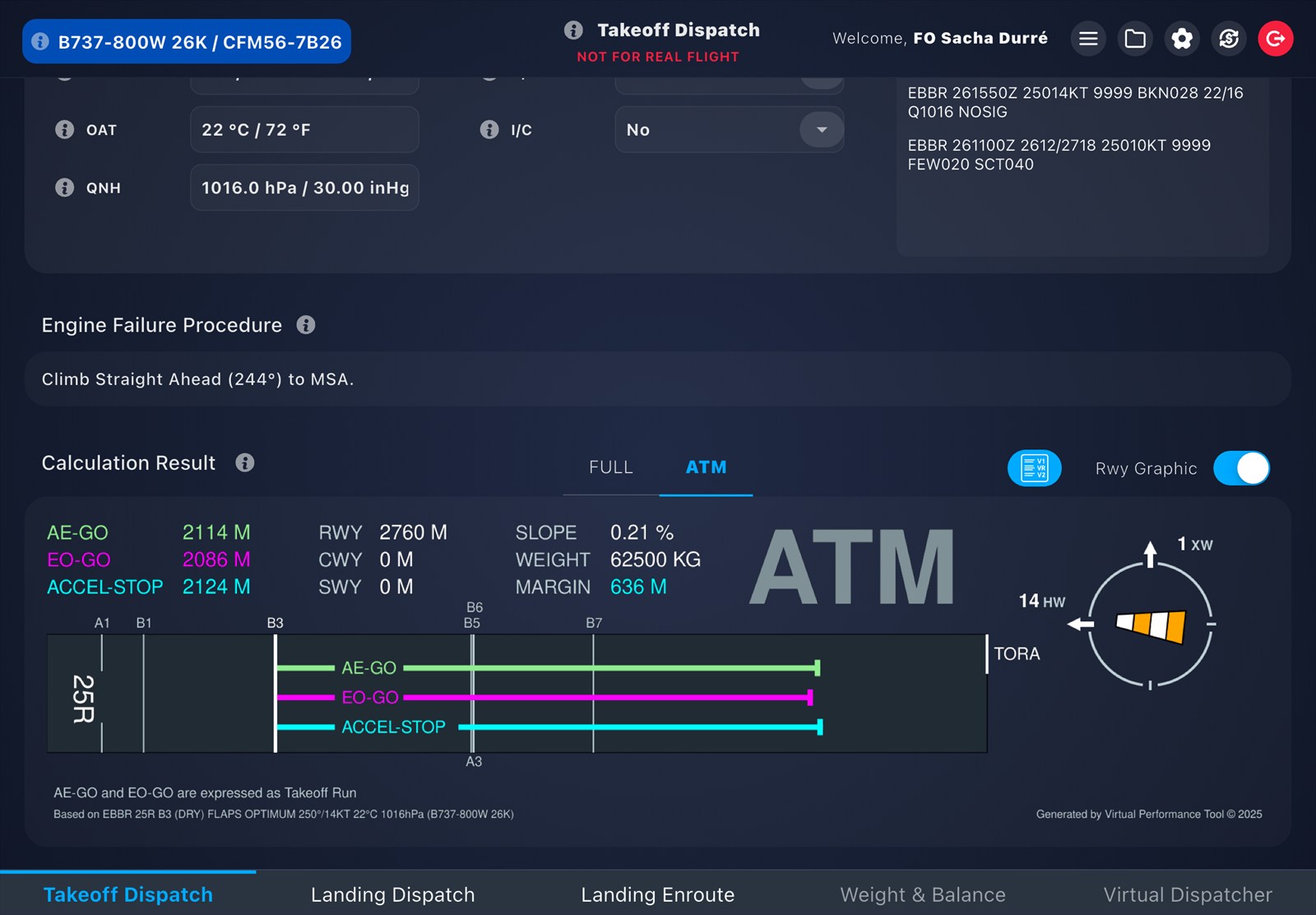
Choose the aircraft configuration and the runway you are actually using, then let VPT work through the applicable limits.
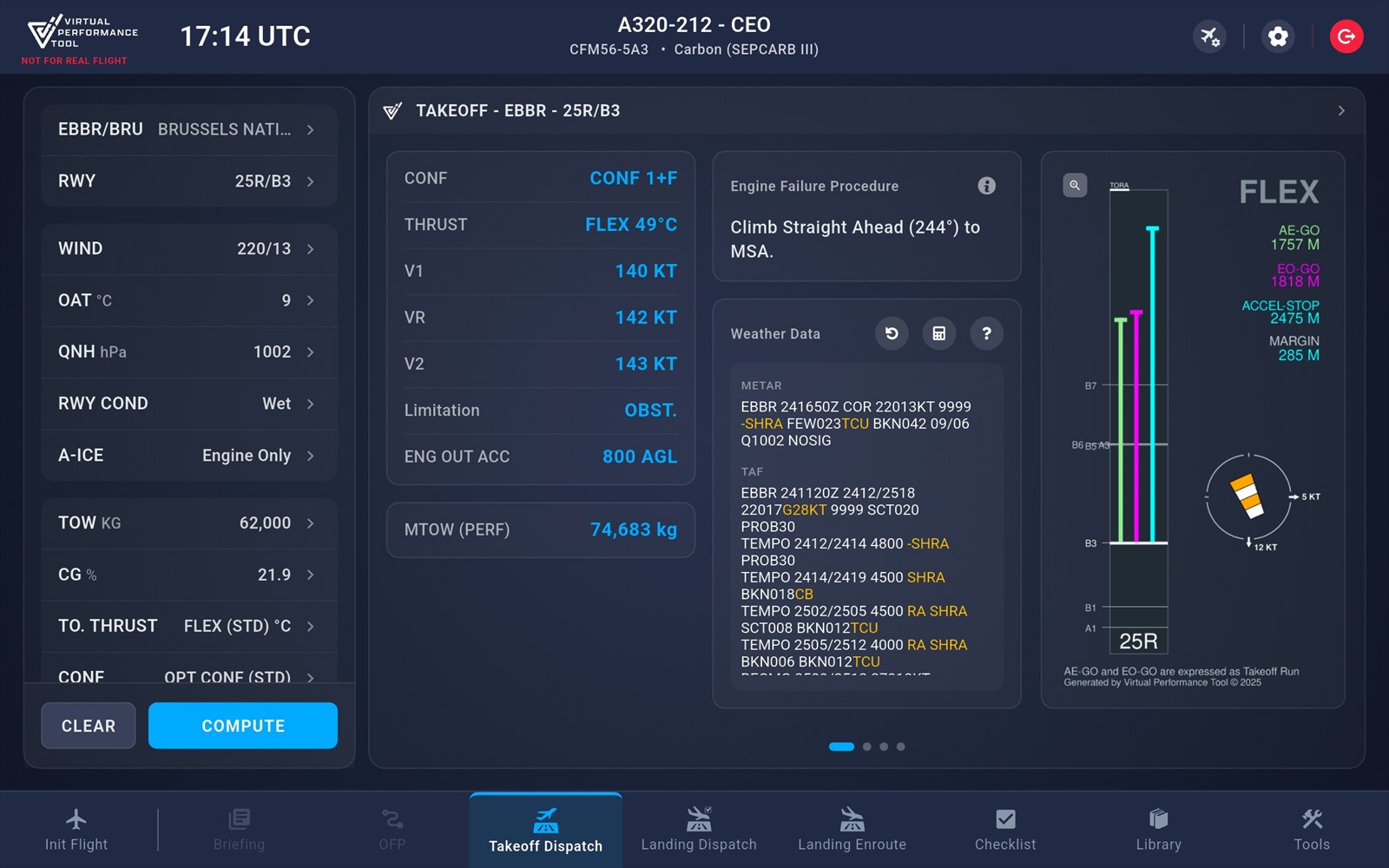
Field length, climb, obstacles, tyres and brakes are evaluated independently, whichever aircraft you fly.
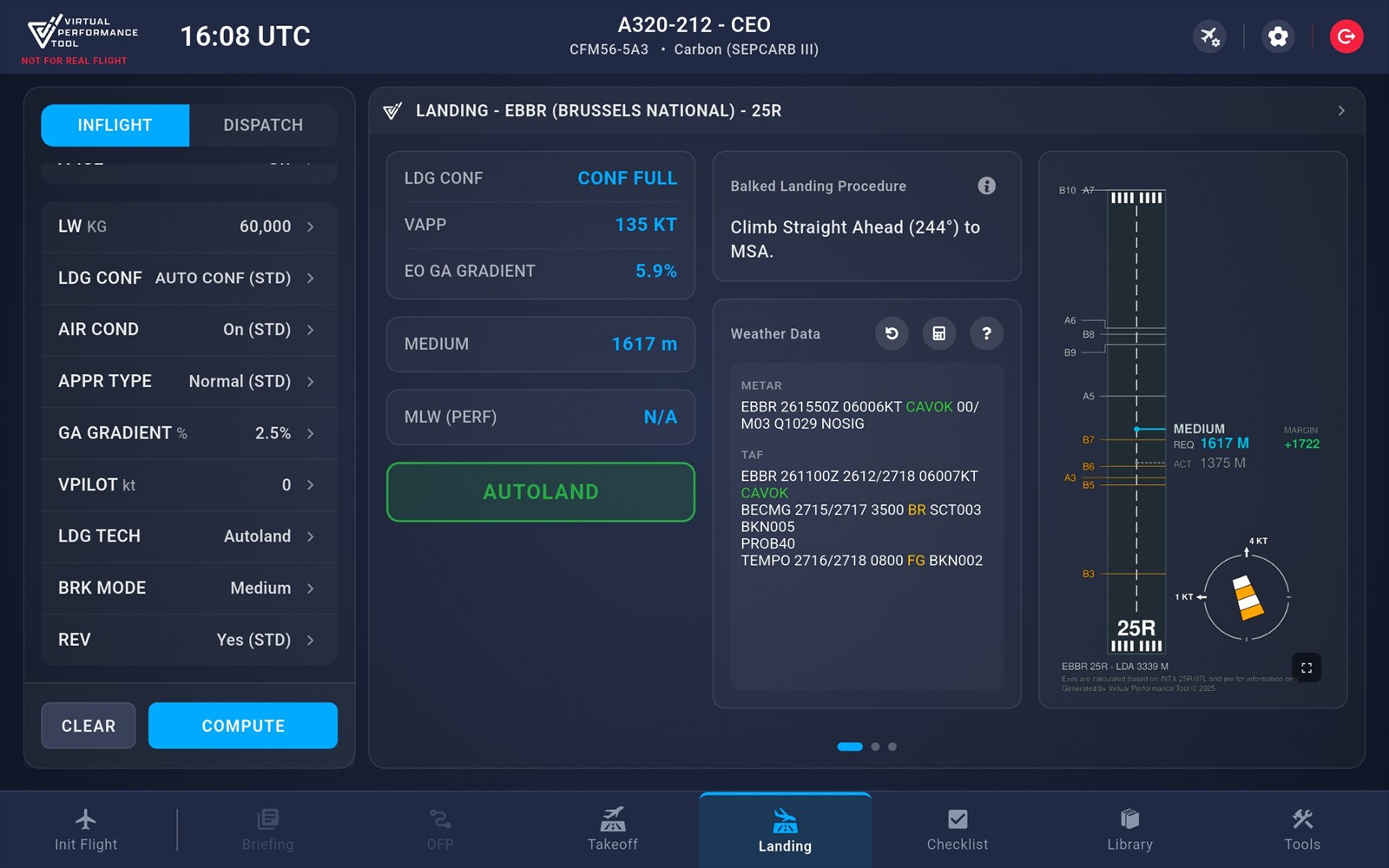
Before departure, VPT returns the maximum allowable landing weight for the destination and alternate.
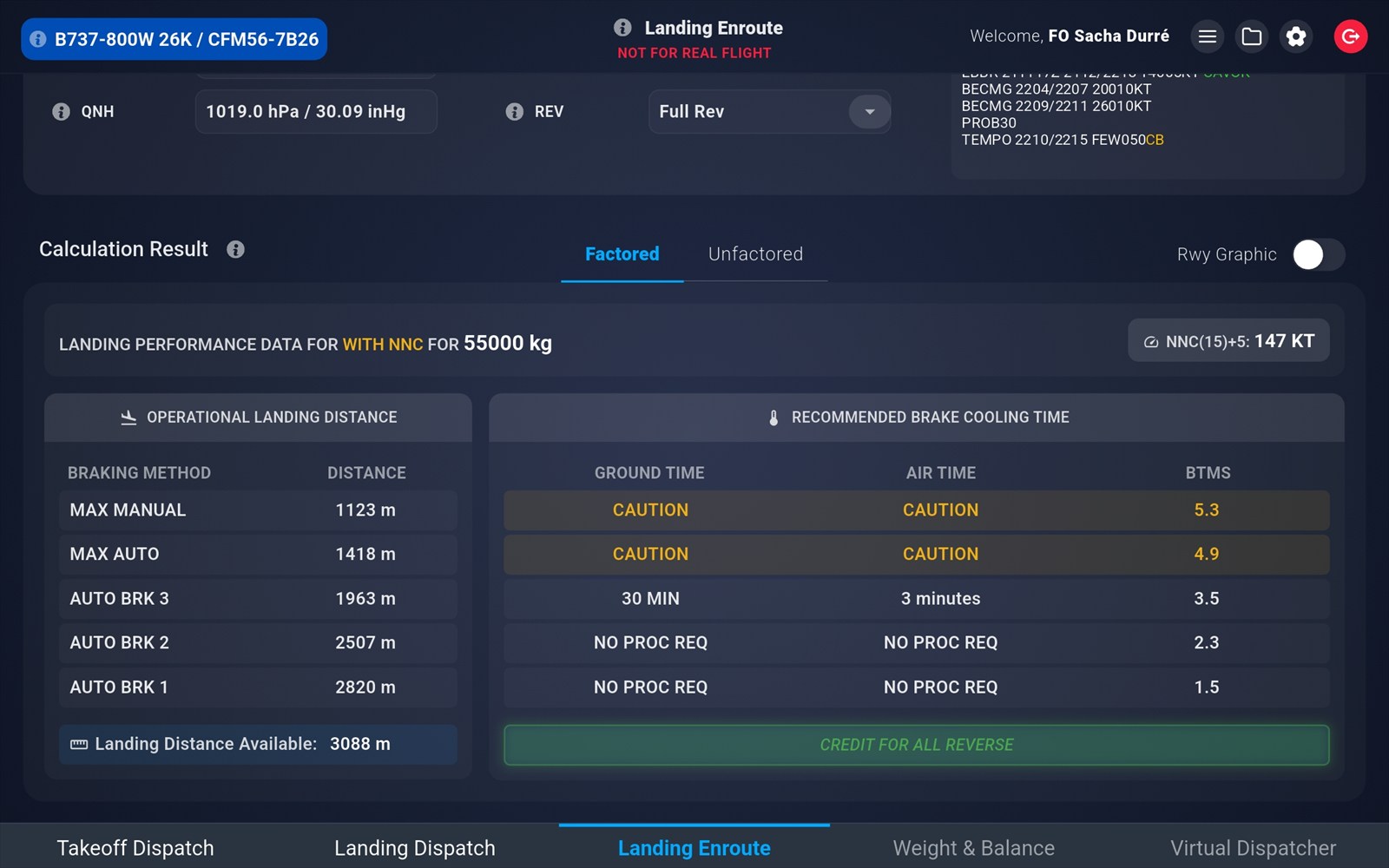
Before arrival, the same model runs again against the latest conditions to return actual landing distance and braking options.
VPT determines how much weight the aircraft can take off with, which speeds to use, and which configuration produces the appropriate result for the runway and conditions selected.
The final performance-limited takeoff weight is simply the lowest weight allowed by all applicable limits.
The most restrictive limit sets the final takeoff weight.
If the actual takeoff weight is below the performance-limited takeoff weight, the aircraft does not necessarily need full rated thrust.
That available performance margin can often be exchanged for reduced takeoff thrust, lowering engine temperature and reducing engine wear while still meeting the required takeoff margins. Reduced-thrust takeoffs are commonly achieved through a fixed derate, assumed temperature / FLEX, or a combination of both where supported.
A fixed derate selects a lower certified takeoff thrust rating. For that takeoff, the engine is treated as a lower-rated engine, reducing the available thrust limit.
Because the certified thrust rating itself is lower, minimum control speeds such as VMCG and VMCA may also be reduced.
Assumed Temperature — called FLEX on Airbus — reduces commanded takeoff thrust by telling the performance system to calculate as though the outside temperature were higher than it actually is.
Unlike a fixed derate, the engine's certified rating has not changed. The minimum control speeds therefore remain based on the applicable full-rated configuration rather than receiving the same benefit as a derated rating.
When VMCG is the limiting factor, a fixed derate can sometimes improve the result in a way that assumed temperature alone cannot, because the lower certified thrust rating can also reduce the applicable minimum control-speed limitation.
Example — 737-700 BBJIts short fuselage gives the rudder a relatively shorter moment arm, while the CFM56-7B27-B3 engines provide very high thrust. At low weights, that combination makes VMCG the limiting factor rather than runway length or climb performance.
At full-rated thrust, an acceptable takeoff solution may therefore not exist.
Selecting a fixed derate lowers the applicable certified thrust rating and can reduce VMCG enough to bring the calculation back within the allowable speed range. Assumed temperature alone cannot provide the same benefit because it does not change the certified thrust rating used for the control-speed limitation.
VPT Optimum RatingVPT can handle this automatically. When using Optimum Rating, VPT evaluates the available thrust ratings and determines the performance-limited takeoff weight at the highest suitable rating that is not constrained by VMCG, avoiding the need to manually test each derate.
On supported aircraft, a derated thrust rating can also be combined with assumed temperature to further reduce thrust while remaining within the available performance margin.
For a given takeoff, V1 can exist within an allowable range. Changing V1 changes the balance between the accelerate-stop distance required and the engine-out takeoff distance required.
VMCG ≤ V1 ≤ VR
Shorter accelerate-stop distance required. Longer engine-out takeoff distance required.
Balances the applicable go and stop requirements.
Longer accelerate-stop distance required. Shorter engine-out takeoff distance required.
VPT uses an optimum V1 strategy to balance the applicable takeoff-go and accelerate-stop requirements while considering factors such as runway, wind, slope and obstacle limitations.
VPT currently applies its own V1 optimization logic automatically. We are investigating an option that would allow users to select the V1 logic or strategy used for the calculation. This remains under evaluation, with no release timeframe announced.
Why VPT may disagree with the CDU/MCDU
Your CDU/MCDU does not perform the complete runway-performance calculation. It may provide reference or default takeoff speeds, but it does not account for every optimization available to a dedicated performance tool, such as optimum V1, improved climb, runway slope or obstacle limitations.
Operator procedures and manufacturer documentation direct crews to use the result from the applicable performance system — such as OPT or FlySmart — when determining takeoff performance. A difference is therefore not necessarily an error; in many cases it is the expected result of a more complete calculation.
Excess runway can be exchanged for higher takeoff speeds, increasing engine-out climb capability and potentially improving the allowable takeoff weight.
Keeping takeoff configuration longer before accelerating can improve obstacle clearance when distant obstacles are limiting. VPT accounts for the applicable acceleration-height and engine-time constraints where supported.
When runway entry geometry prevents the aircraft from starting exactly at the threshold, the usable takeoff distance may need to be reduced. VPT applies the appropriate alignment correction where required.
When terrain or obstacles make a straight-ahead engine-out departure unsuitable, the takeoff calculation may depend on an Engine Failure Procedure (EFP) tailored to that runway and airport.
VPT uses the applicable engine-out path to evaluate obstacle clearance instead of assuming the aircraft simply continues along the runway heading.
An Engine Failure Procedure is not just a text instruction for the pilot. The published text is the operational translation of a much deeper performance process. For each applicable aircraft and runway, the EFP defines the cone in which terrain and published obstacles must be gathered and analysed.
VPT uses that cone to:
The EFP defines the cone in which terrain and obstacles are gathered and evaluated for the takeoff calculation.
The limiting obstacles are then evaluated whenever the corresponding takeoff performance calculation is performed. This analysis is aircraft-specific: the engine-out path and the resulting obstacle set may depend on the runway, the procedure, and the applicable aircraft type / variant performance characteristics.
The engine-out flight path used after takeoff can materially change the obstacle-limited takeoff weight.
VPT cannot accept arbitrary user-created Engine Failure Procedures because a valid procedure requires more than a text description or a set of waypoints. The corresponding obstacle-analysis geometry and obstacle dataset must also be generated and validated for the relevant runway and aircraft before the procedure can be used reliably in performance calculations.
Explore how VPT builds airport and obstacle data
Runway condition is more than simply dry or wet. Depending on the aircraft, manufacturer performance data may include conditions such as Dry, Wet, Slippery Wet, Good, Good-to-Medium, Medium, compacted snow, standing water, slush, dry snow and wet snow, together with applicable contaminant depths.
VPT uses the runway conditions and contaminants supported by the manufacturer performance data available for each aircraft type, rather than applying one generic penalty to every degraded runway.
A shallow layer of contamination may primarily reduce braking effectiveness. As loose contamination becomes deeper, however, it can also create additional displacement, impingement and rolling resistance during the takeoff roll.
Because these effects interact differently depending on contaminant type and depth, a deeper contaminant is not always associated with a lower performance-limited takeoff weight than a shallower one.
VPT models the applicable manufacturer data rather than assuming that every increase in contamination produces the same type of performance penalty.
Assumed Temperature / FLEX is not permitted for every contaminated-runway condition.
On some slippery or contaminated surfaces, aircraft procedures prohibit assumed-temperature reduced thrust even though a fixed derate may still be permitted. The exact restriction depends on the aircraft and its approved performance data.
VPT applies the corresponding aircraft-specific limitation automatically, preventing an assumed-temperature / FLEX solution where the applicable performance data does not permit it.
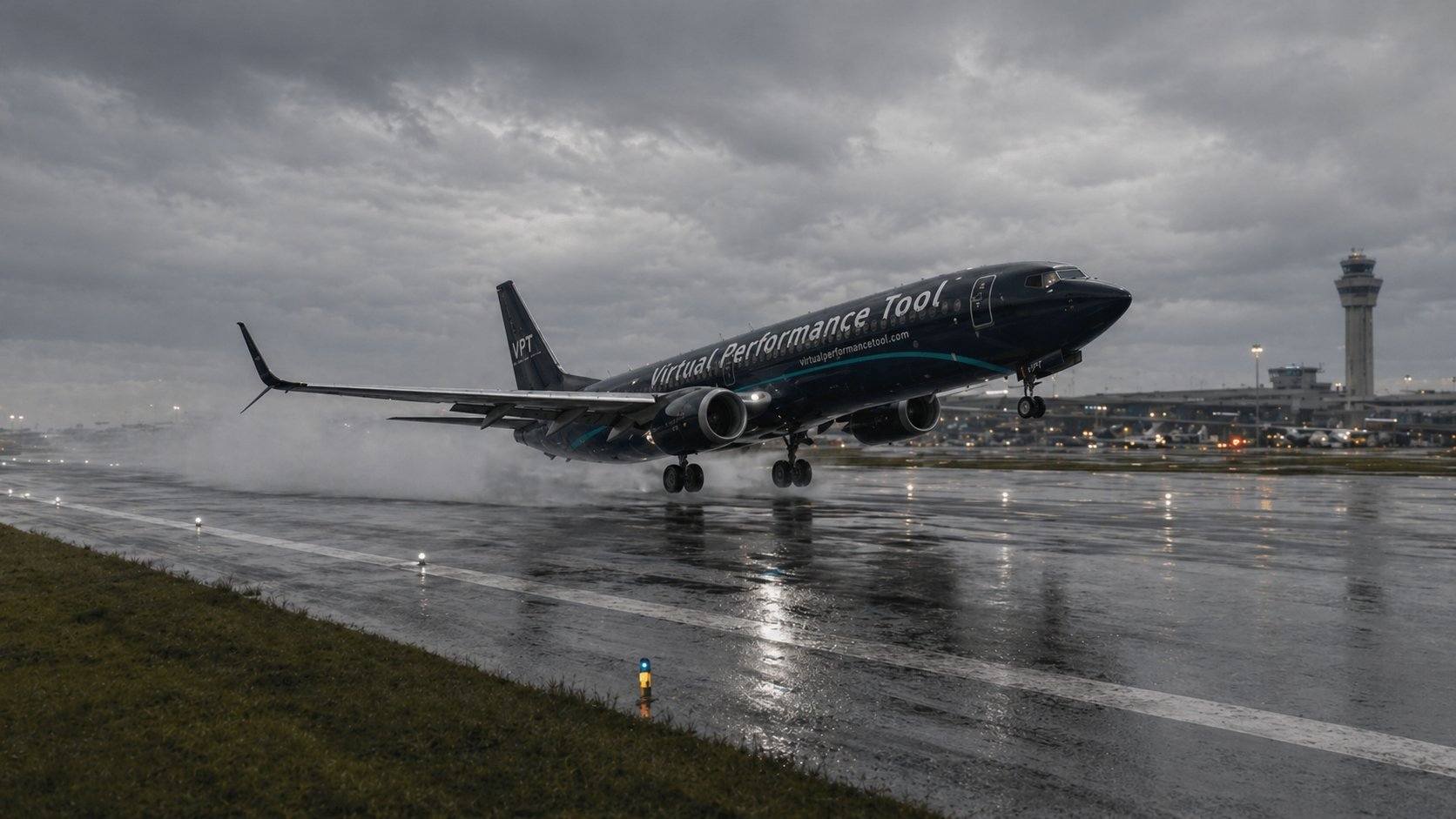
Landing performance answers two different questions depending on when the calculation is performed.
Can the aircraft be dispatched to the destination and alternate at the expected landing weight and forecast conditions?
VPT determines the most restrictive applicable landing weight from:
Maximum landing weight is computed both as a normal landing weight and a with-ice landing weight where applicable.
Using the latest aircraft and runway conditions, VPT determines the actual landing-distance information and braking options needed for the arrival.
Includes:
Landing Enroute builds on the same underlying landing-performance model as Dispatch, but uses the latest conditions and provides operational landing-distance information.
Some procedures require a higher-than-standard missed-approach gradient because of terrain or obstacles.
Where supported, VPT calculates the maximum landing weight compatible with the required turnaround constraint.
Where required, VPT applies the manufacturer's additional autoland landing-distance increment automatically.
Where supported, VPT provides expected ground / air cooling information after landing.
Landing distance can be compared with available exits for a more realistic braking strategy.
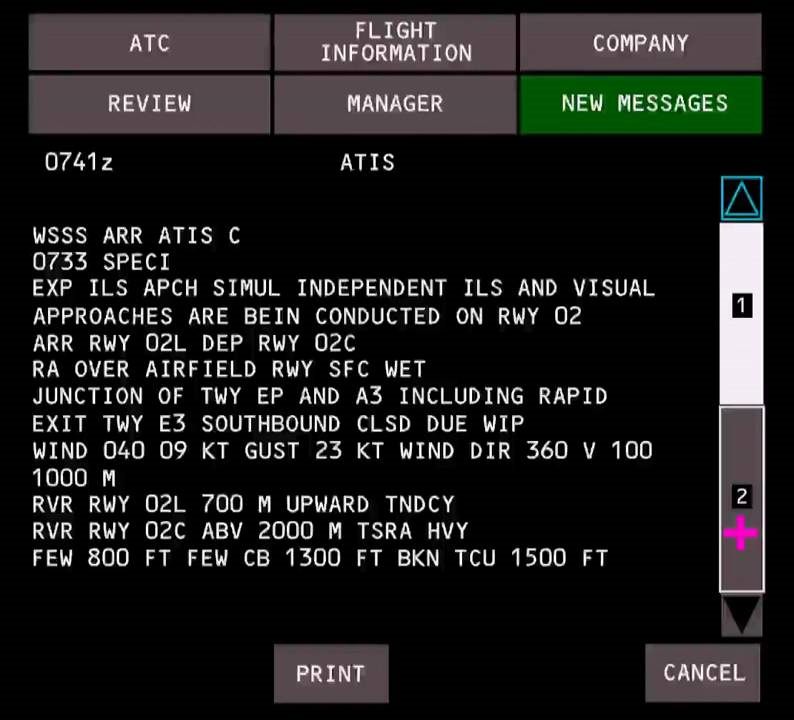
VPT can retrieve and decode METAR, TAF and VATSIM/IVAO ATIS data, then use METAR2VPT to populate much of the performance calculation automatically — including wind, runway condition, anti-ice requirements and other relevant inputs.
As pilot in command, you remain responsible for reviewing the imported conditions before calculating. Significant conditions such as gusts, precipitation, low visibility or convective weather are highlighted for review.
VPT extends beyond the standard case, accounting for changing airport conditions and aircraft-specific operational penalties where supported.
Performance-relevant airport changes can be incorporated into the calculation as they occur. At airports covered by Active Monitoring, the Provider's performance officers review operational changes, while Automated Runway Monitoring detects runway closures across the full database.
Explore airport monitoringWhere aircraft data supports it, applicable Non-Normal Checklist penalties can be applied directly to the landing calculation.
Check aircraft availabilityWhere supported, dispatch performance can account for applicable MEL/CDL penalties directly in the calculation.
Check aircraft availabilityAircraft-specific availability NNC and MEL/CDL coverage varies by aircraft variant and available performance data. See the Fleet page for current support.
Behind every result sits aircraft data, airport data, weather, operational configuration and a chain of performance limits. VPT brings that complexity together so you can focus on the flight — while still seeing what drives the numbers.
Virtual Performance Tool is intended exclusively for flight simulation and training purposes and is not approved for real-world flight operations.